The Gratitude Effect: How Thankfulness Strengthens Mental Health

As the year winds down and the holiday season approaches, many of us find ourselves reflecting on what matters most. Gratitude often takes center stage in November, but beyond being a seasonal sentiment, thankfulness is a powerful mental health tool. Research shows that practicing gratitude can literally change the way our brains function, helping us become more resilient, optimistic, and emotionally balanced.

How Gratitude Rewires the Brain for Resilience

Gratitude isn’t just a “feel-good” emotion; it’s a neurological exercise. When we consciously acknowledge the things we’re thankful for, the brain releases dopamine and serotonin, the chemicals responsible for happiness and emotional regulation. Over time, this repeated activation strengthens neural pathways associated with positive thinking and resilience.

In other words, gratitude helps the brain shift its focus from what’s lacking to what’s working. It retrains the mind to notice moments of safety, connection, and peace even in stressful times. Studies from institutions like UC Davis and Harvard have found that people who regularly practice gratitude report fewer symptoms of anxiety and depression and higher overall life satisfaction.

Simple Ways to Practice Gratitude Daily

Like any habit, gratitude grows stronger with consistency. You don’t need to overhaul your routine. Small, intentional practices can make a big difference. Try starting with:

  • Gratitude Journaling: Each morning or evening, write down three things you’re thankful for. They don’t have to be profound— a good cup of coffee, a friend’s text, or a moment of quiet all count.
  • Mindful Reflection: Pause during your day to notice what’s going right. Savor simple moments such as sunlight through a window, a shared laugh, or a task completed.
  • Express Appreciation: Tell someone how they’ve impacted your life. A simple “thank you” can deepen connection and foster emotional warmth in both people.

How Gratitude Eases Anxiety and Depression

Gratitude acts as a cognitive reframe. It helps balance the mind’s natural negativity bias, the instinct to focus on threats or worries. When practiced consistently, gratitude can lower cortisol (the stress hormone) and increase activity in brain regions tied to empathy and emotional regulation.

For those living with anxiety or depression, gratitude won’t erase difficult emotions, but it can make them more manageable. It helps create mental “space” for positive experiences to coexist with pain, allowing individuals to see challenges within the larger context of what is still meaningful and good.

Holding Space for Both Joy and Pain

It’s important to remember that gratitude isn’t about denying hardship or forcing positivity. True gratitude holds complexity. It acknowledges pain and joy at the same time. You can be thankful for personal growth even as you grieve what was lost. You can feel grateful for support while still struggling.

This honest form of gratitude fosters emotional maturity, helping us integrate both light and shadow, joy and sorrow—the full spectrum of human experience.

A Simple Practice to Try This Month

As you move through November, take a few minutes each day to write down three small things you’re thankful for. Over time, notice how your mood, mindset, and perspective begin to shift.

Gratitude doesn’t erase life’s difficulties, but it softens their edges and reminds us that, even in uncertain seasons, there is still something good worth noticing.

Ready to talk? Schedule your session with SouthEnd Psychiatry today.

Boundaries, Authenticity & Mental Health in Relationships

In today’s world, relationships are evolving in ways that reflect deeper self-awareness and a stronger focus on mental health. More than ever, people are realizing that boundaries, honesty, and vulnerability are not barriers to connection—they are the very foundation of it. Whether you’re navigating the impact of social media, discussing mental health with a partner, or figuring out what healthy communication looks like in your relationship, these values are at the center of it all.

The Importance of Boundaries

Boundaries are not about pushing people away—they’re about creating space for respect and safety. In relationships, emotional boundaries help define what feels supportive versus what feels overwhelming. For example, knowing when you need alone time, how much energy you can give during stressful periods, or how you want to be spoken to during conflict can prevent misunderstandings from becoming destructive patterns. Healthy boundaries are not rigid walls, but flexible guidelines that honor both partners’ needs.

Authenticity Builds Trust

Authenticity means showing up as your real self, without hiding behind masks or trying to meet unrealistic expectations. In relationships, this can look like being honest about your struggles, sharing your values openly, and resisting the urge to curate a “perfect” version of your life for others—especially on social media. When authenticity is at the heart of connection, trust grows naturally. Partners can feel more secure knowing they are loved for who they are, not for who they pretend to be.

Vulnerability as Strength

For many, vulnerability still feels uncomfortable—it can seem like exposing your flaws or weaknesses. But in truth, vulnerability is where intimacy lives. Opening up about your fears, past hurts, or mental health challenges allows your partner to support you more fully. It also creates opportunities for mutual growth, showing that strength comes from sharing life’s weight together rather than carrying it alone.

Navigating Mental Health Conversations

Mental health is no longer something to keep hidden in relationships. Couples are increasingly acknowledging that anxiety, depression, burnout, or trauma may show up at different times, and that supporting each other requires patience and empathy. Healthy communication means asking your partner what kind of support they need, rather than assuming. It means listening without judgment, validating their feelings, and also respecting your own capacity. Sometimes supporting a partner may involve encouraging professional help, while other times it’s simply being present.

Social Media’s Influence

Social media has added a new layer of complexity to modern relationships. Comparison, performative posting, and the pressure to maintain appearances can quietly erode authenticity. Couples who thrive often establish digital boundaries—deciding what they share online, when to unplug, and how to prioritize real-life connection over curated feeds. By talking openly about how social media impacts each partner, couples can avoid unnecessary tension and build more genuine intimacy offline.

Redefining Healthy Communication

Ultimately, healthy communication today is about more than “talking it out.” It’s about listening with presence, honoring differences without defensiveness, and speaking with clarity instead of criticism. Healthy communication balances honesty with kindness, accountability with compassion, and self-expression with openness to the other person’s perspective.


Final Thoughts

Boundaries, authenticity, and vulnerability aren’t just buzzwords—they’re essential for sustainable, fulfilling relationships. By respecting personal limits, embracing honesty, and engaging in supportive conversations around mental health, couples can create stronger bonds built on trust and resilience. In a world where social media and stress often pull us away from connection, choosing authenticity and healthy boundaries brings us closer to the relationships we truly want.

Ready to talk? Schedule your session with SouthEnd Psychiatry today.

Mastering Post-Summer Mental Reset

As the long days of summer wind down and routines begin again, many people feel a shift in energy. The transition into fall can bring renewed focus, but it can also feel overwhelming if you don’t pause to reset. At SouthEnd Psychiatry, we believe this season is the perfect time to take stock of your mental health and enter the next chapter with intention.

Reset Healthy Boundaries

During the summer, schedules often become more relaxed—late nights, spontaneous trips, or extra commitments. As you return to school, work, or busier routines, now is the time to reestablish clear boundaries. Ask yourself:

  • Am I saying yes to too many things?
  • Do I have dedicated time for rest and self-care?
  • Are my digital habits (like screen time) supporting or draining me?

Healthy boundaries not only protect your time and energy but also strengthen relationships by setting realistic expectations.

Reflect on Summer Growth

Even if summer felt chaotic, there are always lessons hidden in the season. Did you discover a new hobby? Spend quality time with family? Learn more about what energizes—or depletes—you? Take a few minutes to journal about your highlights and challenges. Reflection helps you carry forward what worked well and let go of what didn’t.

Set Next Steps for Balanced Well-Being

With clarity on your boundaries and lessons from the summer, it’s time to set simple, achievable goals for the months ahead. That could mean committing to a consistent sleep schedule, scheduling therapy sessions, or planning weekly downtime. Think of these as “anchors” that keep you balanced as life speeds up.

Moving Forward with Intention

Transitions can feel stressful, but they’re also opportunities to realign with what matters most. By resetting boundaries, reflecting on your growth, and setting intentional next steps, you can create a strong foundation for mental wellness this fall.

At SouthEnd Psychiatry, we’re here to support you in making these changes stick. Whether you’re a student, parent, or professional, we can help you navigate the post-summer reset with tools that last well beyond the season.

Ready to refocus? Schedule your session with SouthEnd Psychiatry today.

Resetting After Summer: Mental Health Strategies for Students

As summer break winds down, students face the transition back to busy school schedules, academic demands, and social pressures. For many teens and college students, this shift can trigger feelings of anxiety, stress, or overwhelm—especially after months of looser routines. Taking time to prepare mentally and emotionally can make the back-to-school season smoother and healthier.

Establish Routines Early

A consistent daily routine helps students feel grounded and less overwhelmed when the school year begins. Encourage teens to start waking up and going to bed at regular times a week or two before school starts. Planning out study times, meal prep, and healthy sleep habits can also create a sense of structure that reduces stress.

Balance Screen Time

After a summer filled with social media and entertainment, cutting back on screen time can be challenging. Students benefit from setting boundaries with devices—such as creating “phone-free” study hours or keeping devices out of bedrooms at night—to improve focus, sleep quality, and overall mental well-being.

Practice Stress-Relief Breaks

Simple, practical habits can help students recharge during demanding school days. Whether it’s taking a short walk, doing deep-breathing exercises, or journaling, finding small ways to pause and reset throughout the day is essential for mental clarity.

Seek Support When Needed

School counselors, peer groups, and mental health resources on campus can provide valuable support. College students, in particular, should take advantage of on-campus mental health services, which can help them navigate academic pressure, homesickness, or social stress. Teens should be reminded that talking to a trusted adult—parent, teacher, or counselor—can make all the difference.

The Bottom Line

Transitioning back to school isn’t just about supplies and schedules; it’s also about mental readiness. By creating healthy routines, managing screen time, and seeking support, students can set themselves up for a successful and balanced school year.


We’re Here to Support You

At SouthEnd Psychiatry, we understand the weight of the mental load—and we’re here to help lighten it. Whether you’re overwhelmed, burned out, or just need someone to talk to, our compassionate providers are ready to support your mental and emotional well-being this summer and beyond.

Take a step toward peace. Schedule a session today.

The Mental Load is Real: How to Protect Your Peace This Summer

Summer is often seen as a season of rest and relaxation—but for many, it can bring a different kind of stress. Between coordinating family activities, juggling work responsibilities, managing kids’ summer schedules, planning vacations, and maintaining everyday life, the “mental load” can quickly become overwhelming.

What Is the Mental Load?

The mental load refers to the invisible, ongoing task of planning, remembering, and managing all the details of life—often carried by one person in a household. It’s the mental energy spent keeping track of who needs what, when things are due, and how to keep everything running smoothly.

This emotional labor is often unrecognized, but it takes a toll. It can lead to anxiety, irritability, sleep issues, and even burnout—especially during high-expectation seasons like summer.

Why Summer Can Increase the Mental Load

While summer offers longer days and (hopefully) some downtime, it also presents unique challenges:

  • Disrupted routines due to school being out
  • Increased responsibilities like childcare or coordinating camps
  • Pressure to “make the most” of the season with memorable family moments
  • Balancing work and play without enough rest or recharge

How to Protect Your Peace

The good news? With awareness and intention, you can reduce the mental load and enjoy a calmer, more fulfilling summer. Here’s how:

1. Share the Load

Don’t carry it all alone. Talk openly with your partner, family, or support network about responsibilities. Delegate tasks, even the mental ones like tracking schedules or grocery lists.

2. Simplify Where You Can

You don’t need a perfect Pinterest summer. Focus on what matters most to you and your family. Say no to extra commitments that drain your energy without adding joy.

3. Schedule Recharge Time

Put quiet time on the calendar for yourself—just like appointments or events. Whether it’s a walk, a podcast, or 10 minutes with a book, prioritize activities that refill your emotional cup.

4. Set Realistic Expectations

Release the pressure to create a “perfect” summer. It’s okay for some days to be ordinary. Peace often lives in the simple, unplanned moments.

5. Talk to Someone

If your mental load is affecting your health or relationships, you don’t have to navigate it alone. Therapy can help you understand your stress, set boundaries, and develop sustainable coping strategies.


We’re Here to Support You

At SouthEnd Psychiatry, we understand the weight of the mental load—and we’re here to help lighten it. Whether you’re overwhelmed, burned out, or just need someone to talk to, our compassionate providers are ready to support your mental and emotional well-being this summer and beyond.

Take a step toward peace. Schedule a session today.

Mental Health in the Workplace: How Employers and Employees Can Prioritize Wellness

Mental health is no longer just a personal matter—it’s a workplace priority. With rising awareness of how emotional well-being impacts performance, collaboration, and overall success, businesses and employees alike are recognizing the importance of creating mentally healthy work environments. Prioritizing mental health at work isn’t just good for individuals; it’s essential for building resilient, productive organizations.

Here’s how both employers and employees can take meaningful steps toward fostering a culture of wellness.

Why Workplace Mental Health Matters

The average person spends a third of their life at work. Stress, burnout, anxiety, and depression don’t stay behind when employees clock in—they show up in reduced focus, absenteeism, turnover, and strained workplace relationships. Research shows that prioritizing mental health leads to increased engagement, higher job satisfaction, and even better financial outcomes for companies. Simply put: when people feel supported, they thrive—and so does the organization.

What Employers Can Do

1. Build a Culture of Openness
Normalize conversations about mental health. Encourage leadership to model vulnerability and promote the idea that seeking help is a sign of strength, not weakness. Offering mental health awareness training can equip managers to recognize signs of distress and respond with empathy.

2. Offer Meaningful Resources
Employee Assistance Programs (EAPs), access to counseling services, wellness workshops, and mental health days are tangible ways to show employees their well-being is valued. Make sure these resources are easy to access, confidential, and promoted regularly—not just in times of crisis.

3. Rethink Workload and Expectations
Chronic stress is often tied to unrealistic expectations and lack of control. Encourage reasonable workloads, realistic deadlines, and autonomy wherever possible. Implementing flexible scheduling or remote work options can also help employees better balance their work and personal lives.

4. Create Safe Physical and Virtual Workspaces
Design environments—both in-office and online—that support wellness. This can include quiet spaces for breaks, encouraging regular movement, or hosting virtual mindfulness sessions for remote teams.

5. Recognize and Reward
Positive feedback and recognition go a long way in boosting morale. Make it a habit to celebrate not just outcomes, but effort and collaboration. Feeling appreciated can significantly buffer against workplace stress.

What Employees Can Do

1. Prioritize Self-Care
Taking care of your mental health isn’t selfish—it’s foundational. Build routines that support your well-being, such as regular exercise, healthy eating, adequate sleep, and time for hobbies or relaxation.

2. Set Boundaries
Communicate clearly about your workload and availability. It’s okay to say no to additional responsibilities when you’re at capacity, and to log off at a reasonable time. Boundaries help prevent burnout before it begins.

3. Use Available Resources
Take advantage of mental health programs, therapy benefits, or wellness initiatives your employer offers. Seeking support early can prevent small issues from becoming larger challenges.

4. Stay Connected
Building positive relationships at work can reduce feelings of isolation and create a network of support. Make time to connect with colleagues—whether through collaboration, mentoring, or informal conversations.

5. Advocate for Yourself and Others
If you notice areas where mental health support could be improved, speak up. Employers often welcome feedback and may not be aware of gaps unless employees share their experiences and ideas.

Moving Forward Together

Prioritizing mental health in the workplace requires commitment from both leadership and employees. It’s about creating an environment where people feel valued, supported, and empowered to bring their full selves to work. At Southend Psychiatry, we believe that healthy workplaces create healthy communities—and we’re here to support organizations and individuals every step of the way.

If you or your organization is looking for mental health resources, workshops, or professional support, contact Southend Psychiatry today.

Together, we can build workplaces where wellness isn’t an afterthought—it’s the foundation.


Southend Psychiatry 

Schedule your appointment today with one of our SouthEnd Psychiatry clinicians. Book your appointment online or call 1-800-632-7969 to get started today.

How to Talk to Teens About Mental Health: A Guide for Parents and Educators

Talking to teens about mental health can feel overwhelming, but these conversations are more important than ever. With rising rates of anxiety, depression, and stress among adolescents, it’s essential that parents and educators create safe spaces where teens feel heard, supported, and empowered to seek help when needed. Here’s how to open the door to meaningful dialogue and support their mental well-being.

Start Early and Normalize the Conversation

Mental health shouldn’t be a taboo topic saved for crisis moments. Begin conversations early by talking openly about emotions, stress, and coping strategies in everyday situations. Normalize mental health the same way you would physical health—acknowledging that everyone experiences emotional ups and downs, and it’s okay to ask for help.

Create a Safe, Nonjudgmental Space

Teens are highly sensitive to judgment. Approach conversations with empathy and without jumping to conclusions. Let them know you’re there to listen, not to lecture. Simple phrases like, “I’m here for you” or “It’s okay to feel what you’re feeling” can go a long way toward building trust.

Listen More Than You Speak

When a teen opens up, resist the urge to immediately offer advice or solutions. Instead, focus on listening fully. Ask open-ended questions like, “Can you tell me more about how you’re feeling?” or “What do you think would help you right now?” Listening without interruption validates their experiences and shows that you value their voice.

Watch for Subtle Signs

Teens aren’t always direct about what they’re experiencing. Changes in mood, sleep patterns, academic performance, or social habits can all be early signs of mental health struggles. Pay attention to these cues, and approach them gently, without accusation. A simple “I’ve noticed you seem a little different lately—want to talk about it?” can open a door.

Use Language They Relate To

Avoid clinical jargon or labels that might feel intimidating. Instead of asking, “Are you depressed?” try saying, “Have you been feeling really down lately?” Speak in a way that feels natural, relatable, and free of stigma.

Empower, Don’t Shame

If a teen shares that they’re struggling, validate their courage in opening up. Focus on empowering them with coping tools and resources rather than shaming them for how they feel. Reinforce the message that seeking help is a sign of strength, not weakness.

Involve Professional Help When Needed

Sometimes professional support is necessary—and that’s okay. Let teens know that therapists, counselors, and psychiatrists are there to help them build skills and strategies for managing life’s challenges, not to “fix” them. Normalize therapy as a healthy, proactive choice.

Educate Yourself

The more informed you are about mental health, the more confident you’ll feel talking about it. Learn about common teen mental health conditions, risk factors, and warning signs. This knowledge helps you approach conversations from a place of understanding, not fear.

Be Patient and Consistent

Building trust takes time. Even if a teen doesn’t open up right away, keep the door open. Check in regularly, and remind them you’re always available to listen—no matter what.


At Southend Psychiatry, we believe that open, supportive conversations about mental health can change lives. Whether you’re a parent, teacher, coach, or mentor, your willingness to talk—and to truly listen—can make a lasting difference for the teens in your life.

If you or your teen needs additional support, our compassionate team is here to help. Contact Southend Psychiatry today to learn more about our services.


Southend Psychiatry 

Schedule your appointment today with one of our SouthEnd Psychiatry clinicians. Book your appointment online or call 1-800-632-7969 to get started today.

Seasonal Affective Disorder (SAD): Recognizing and Managing Winter Depression

As the days grow shorter and the temperatures drop, many people find themselves feeling a bit more tired, unmotivated, or down than usual. For some, however, these seasonal changes bring on a deeper and more profound sense of sadness, lethargy, and withdrawal—a condition known as Seasonal Affective Disorder (SAD). SAD is a type of depression that follows a seasonal pattern, most often occurring in the fall and winter months. Understanding the symptoms of SAD and exploring effective ways to manage it can make a significant difference for those affected by this condition.

At Southend Psychiatry, we’re here to help you recognize the signs of SAD and provide support through therapies, lifestyle changes, and treatment options that can bring relief and restore balance during the darker months.

Recognizing the Symptoms of Seasonal Affective Disorder

Seasonal Affective Disorder often begins in late fall and can persist until spring. Its symptoms can range from mild to severe and typically include:

  • Low Mood: Persistent feelings of sadness, hopelessness, or apathy.
  • Lethargy and Fatigue: A strong sense of tiredness and low energy, even after a full night’s sleep.
  • Increased Sleep: A tendency to sleep more than usual, often feeling like it’s never enough.
  • Weight Gain and Appetite Changes: Increased cravings for carbohydrates and comfort foods, which can lead to weight gain.
  • Social Withdrawal: Reduced interest in social activities, hobbies, and connections with others.
  • Difficulty Concentrating: A feeling of “brain fog” or trouble focusing on tasks.

These symptoms can disrupt daily life, making it difficult to maintain routines, work effectively, and engage in relationships. While it’s normal to feel some adjustment as the seasons change, people with SAD experience symptoms that significantly impact their quality of life.

What Causes Seasonal Affective Disorder?

Although the exact causes of SAD are still being studied, several factors appear to contribute to this condition:

  • Reduced Sunlight Exposure: Shorter days and less sunlight can disrupt your body’s internal clock, leading to feelings of fatigue and depression. Sunlight exposure plays a crucial role in regulating mood by impacting serotonin production and melatonin levels.
  • Circadian Rhythm Disruption: Our bodies rely on sunlight to maintain a consistent sleep-wake cycle. When daylight hours decrease, the disruption of this natural rhythm can affect our mood and energy.
  • Serotonin and Melatonin Imbalance: Reduced sunlight can lead to lower serotonin levels, impacting mood and emotional stability. Melatonin production, which helps regulate sleep, may also increase during darker months, contributing to sleepiness and lethargy.

Managing Seasonal Affective Disorder: Therapies, Lifestyle Changes, and Support Options

If you recognize the symptoms of SAD in yourself or a loved one, there are several effective treatment and management strategies to consider. Here are some approaches to help reduce the impact of SAD and enhance your mental well-being:

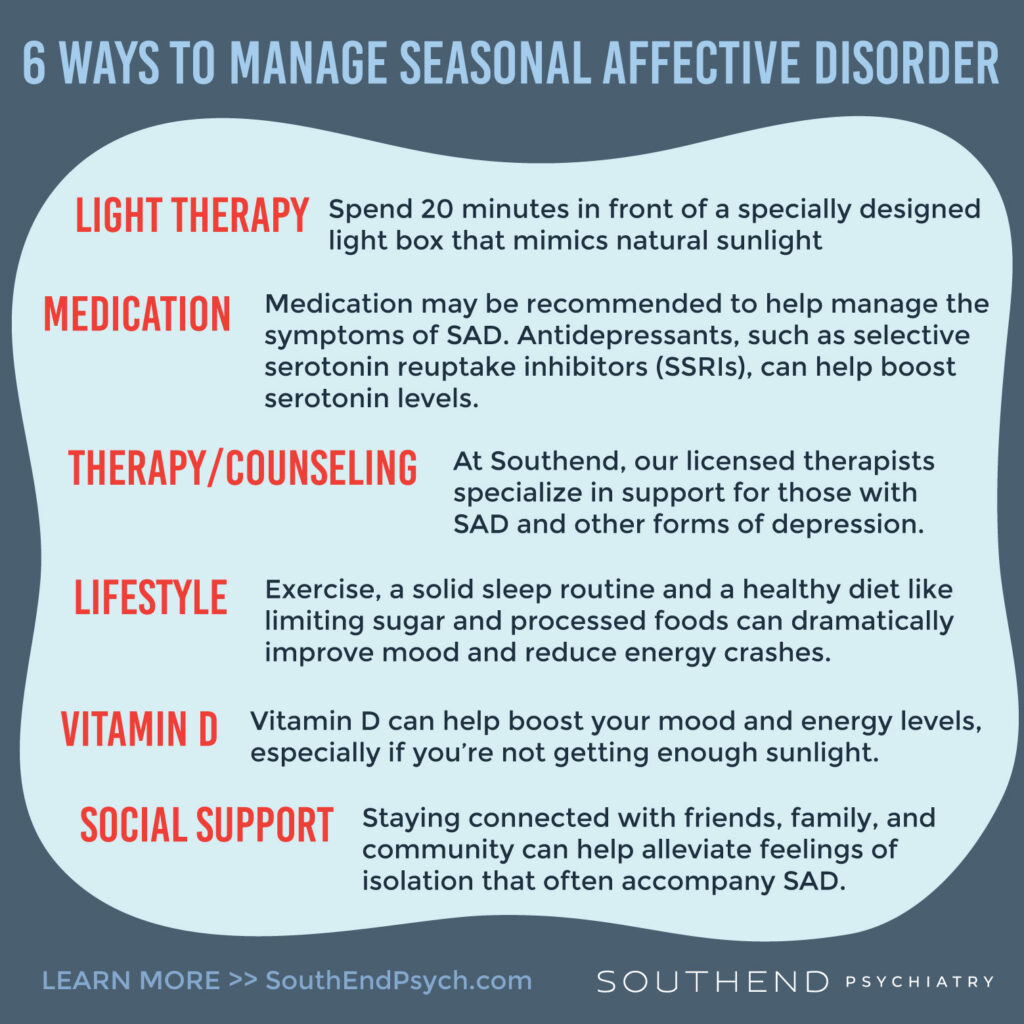
1. Light Therapy

  • Light therapy is one of the most effective treatments for SAD. This involves sitting in front of a specially designed light box that mimics natural sunlight, typically for about 20-30 minutes each morning. Light therapy can help regulate your body’s sleep-wake cycle, boost serotonin levels, and alleviate symptoms of SAD.
  • When using a light box, make sure to choose one with at least 10,000 lux of light and follow your doctor’s recommendations for usage.

2. Therapy and Counseling

  • Cognitive Behavioral Therapy (CBT) is highly effective for treating SAD. CBT helps you identify and change negative thought patterns and behaviors that contribute to feelings of depression. Through CBT, you can develop coping skills to manage symptoms and improve your overall mental health.
  • At Southend Psychiatry, our licensed therapists specialize in providing support for individuals with SAD and other forms of depression. A personalized approach to therapy can empower you to manage your symptoms more effectively.

3. Medication

  • In some cases, medication may be recommended to help manage the symptoms of SAD. Antidepressants, such as selective serotonin reuptake inhibitors (SSRIs), can help boost serotonin levels and improve mood.
  • If you’re considering medication, speak with a psychiatrist or healthcare provider who can assess your specific needs and help you find the most suitable treatment options.

4. Vitamin D Supplementation

  • Reduced sunlight exposure during the winter months can lead to lower levels of vitamin D, which may contribute to feelings of depression. Taking a vitamin D supplement can help boost your mood and energy levels, especially if you’re not getting enough sunlight.
  • Consult your healthcare provider for guidance on the right dosage for you.

5. Lifestyle Changes

  • Exercise: Regular physical activity, particularly outdoors, can significantly improve mood and energy levels. Even a short walk outside on a bright winter day can make a difference.
  • Healthy Diet: Focus on nutrient-dense foods, such as fruits, vegetables, lean proteins, and whole grains. Limiting sugar and processed foods can help prevent energy crashes and maintain stable blood sugar levels.
  • Sleep Routine: Aim for a consistent sleep schedule by going to bed and waking up at the same time each day. Good sleep hygiene practices, such as limiting screen time before bed, can also improve your sleep quality.

6. Social Support and Connection

  • Staying connected with friends, family, and community can help alleviate feelings of isolation that often accompany SAD. Even if you don’t feel like socializing, spending time with supportive people can provide comfort and lift your mood.

Don’t Let SAD Keep You in the Dark—Seek Support

If you’re struggling with symptoms of Seasonal Affective Disorder, remember that you’re not alone. SAD is a common condition, and there are effective treatments and support options available. By recognizing the signs, seeking appropriate treatment, and making small lifestyle adjustments, you can minimize the impact of SAD and enjoy a brighter, more balanced winter season.

At Southend Psychiatry, we’re committed to helping you find relief from SAD and other mental health challenges. Reach out to us today to learn more about how we can support you on your journey to better mental health.

Ready to Take Control of Your Mental Health?

If you or someone you know is struggling with Seasonal Affective Disorder, contact Southend Psychiatry for a consultation. Our experienced team of mental health professionals is here to provide personalized support and guidance. Don’t let SAD keep you from living fully—let us help you find light in the darker months.

Southend Psychiatry 

Schedule your appointment today with one of our SouthEnd Psychiatry clinicians. Book your appointment online or call 1-800-632-7969 to get started today.

Rest Easy: 5 Effective Ways to Fall Asleep When Stress Keeps You Awake

Stress has an uncanny ability to disrupt our sleep when we need it the most. As your mind races and tension builds, falling asleep can feel nearly impossible. At Southend Psychiatry, we understand how crucial a good night’s sleep is for mental and emotional well-being. To help you combat those restless nights, we’ve put together five proven strategies to help you relax and drift off, even when stress is trying to keep you awake.

1. Practice Deep Breathing or Meditation

When stress keeps your mind in overdrive, practicing deep breathing or meditation can calm both your body and mind. Try the 4-7-8 breathing technique:

  • Inhale through your nose for 4 seconds.
  • Hold your breath for 7 seconds.
  • Exhale through your mouth for 8 seconds. Repeating this cycle a few times signals your nervous system to relax, easing you into a more restful state.

2. Create a Relaxing Bedtime Routine

A consistent bedtime routine signals your body that it’s time to wind down. An hour before bed, switch off screens and engage in calming activities such as reading, journaling, or taking a warm bath. Incorporating aromatherapy, such as lavender or chamomile essential oils, can further enhance the relaxation process. Over time, your brain will associate this routine with sleep, making it easier to unwind after a stressful day.

3. Limit Caffeine and Heavy Meals in the Evening

Caffeine, sugar, and large meals can interfere with your body’s ability to wind down. Avoid these stimulants at least 4-6 hours before bedtime. Instead, opt for sleep-friendly snacks like a handful of almonds or a small glass of warm milk. This will not only help regulate your blood sugar but also promote the production of melatonin, the hormone responsible for sleep.

4. Use Progressive Muscle Relaxation (PMR)

Progressive muscle relaxation (PMR) is a simple technique that involves tensing and then slowly relaxing each muscle group in your body. Start from your toes and work your way up to your head. As you release the tension in each area, you’ll find yourself feeling calmer and more connected to your body, which can make it easier to fall asleep despite feeling stressed.

5. Journal Your Worries Away

If your mind is racing with worries, try journaling before bed. Write down everything that’s stressing you out, along with any to-do lists or tasks for the next day. This process helps clear your mind and allows you to put those thoughts aside until the morning. You can also end your journaling session by writing down three things you’re grateful for. Focusing on gratitude shifts your mindset away from stress and toward positivity, helping you fall asleep with a calmer mind.

Sleep Is Within Reach

Falling asleep when you’re stressed may feel difficult, but with the right strategies, it’s possible to reclaim your rest. By practicing relaxation techniques, establishing a bedtime routine, and making mindful choices about your evening habits, you can overcome stress-induced sleeplessness.

If stress and sleeplessness are persistent issues, you’re not alone. At Southend Psychiatry, we offer tailored solutions to help you manage stress and improve your sleep. Reach out to us for professional guidance on achieving a balanced and restful life.

Southend Psychiatry 

Schedule your appointment today with one of our SouthEnd Psychiatry clinicians. Book your appointment online or call 1-800-632-7969 to get started today.

What Does Mental Health Look Like for Men

June is Men’s Mental Health Awareness Month and SouthEnd Psychiatry is raising awareness for this less publicized yet critically vital topic.

As Healthline.com writes, there’s still a stigma around men’s mental health, making it more difficult for males of all ages to reach out for help. Some men might still feel as if people expect them to hide their emotions and “man up,” or be strong for others. Having or acknowledging a mental health condition is still seen as a sign of weakness or lack of masculinity among some men.

Mental Health America (MHA) adds that more than six million American men experience symptoms of depression annually and most go undiagnosed. Let’s dive into what causes those stressors.

Stressful Transitions

An article published by Medical News Today states that situational stressors play a major role in suicide deaths among males, many of whom do not have a documented mental health history, according to a 2021 analysis from the CDC. These stressors can include anything from relationship troubles to arguments, but all indicate a need for “support during stressful transitions.”

Stumbling Blocks for Men of Color

The National Alliance on Mental Health reports that just 1 in 3 Black adults with mental illness receives treatment, despite the fact that they are more likely to experience emotional distress than white adults. Generational racial trauma and violence against people of color, as played out in the news media, intensify this distress.

Unlikely Symptoms

A recent study conducted by the National Institute of Mental Health, found that symptoms of depression in males can be physiological, such as a racing heart, digestive issues, or headaches. Males may be more likely to see their doctor about physical symptoms than emotional symptoms.The organization also notes that men who experience depression may self-medicate with alcohol and other substances. However, this can exacerbate their issues and put them at risk of other health conditions.

What You Can Do

While it is becoming more and more acceptable for men to seek therapy, it is vital that we continue advocating for men’s mental health. Talk to your male loved ones. Check in with them. If they are experiencing depression, anger, anxiety or any other stressor, SouthEnd is here to help.

SouthEnd Psychiatry wants you to be well and to feel well in life. We invite you to start a conversation with us, on your terms, in-person or online and want you to know you’re not alone.

Southend Psychiatry 

Schedule your appointment today with one of our SouthEnd Psychiatry clinicians. Book your appointment online or call 1-800-632-7969 to get started today.

Book Appointment

PLEASE CLICK BELOW TO BOOK YOUR IN-OFFICE VISIT

Smiling woman booking an appointment on her phone